
What is a workplace calculation?
A workload calculation shows how much working time is required for the operation and maintenance of a property.
It is primarily used in building maintenance, cleaning, and facility management. The goal is not only to estimate the workload but to calculate it transparently and derive the necessary staffing levels from it.
Why is workplace calculation important?
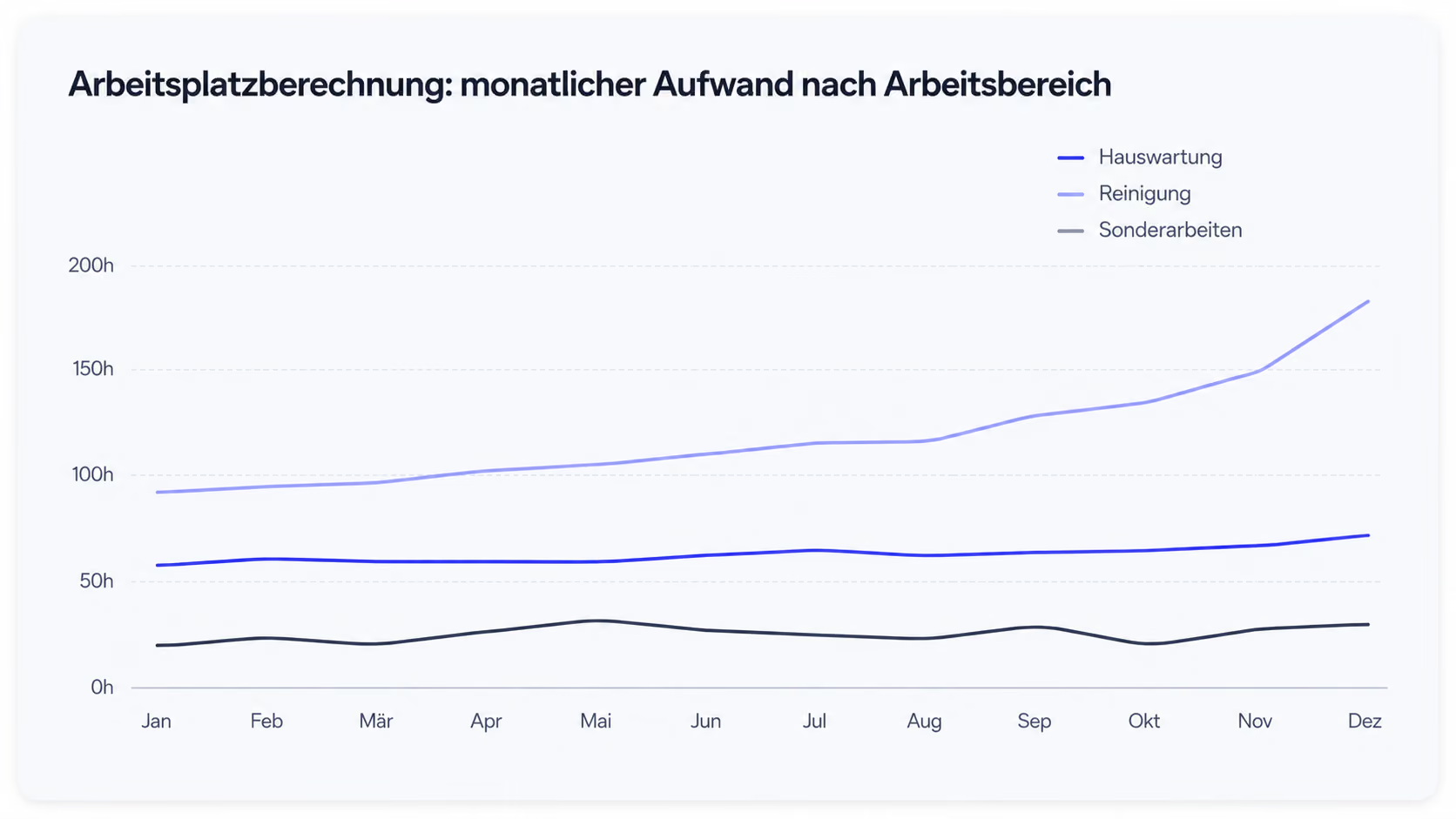
Buildings change. Uses change, spaces are expanded or remodeled, and cleaning and maintenance requirements can also change.
Therefore, an old estimate no longer automatically reflects the actual need.
A job analysis shows how much work is actually required and what percentage of a full-time equivalent position is needed. This provides a better basis for personnel planning, budgeting, and organization.
What is calculated in a workplace calculation?
Depending on the property, different tasks are considered:
• Routine cleaning
• Deep cleaning
• Building maintenance
• Grounds and landscaping
• Technical inspections
• Waste disposal
• Special tasks
• Administrative duties.
It's not just the square footage that's taken into account. The usage, frequency, and type of work involved also play an important role.
For example, a heavily used school building, despite having a similar area, can require significantly more work than a rarely used office building.
How does a workplace calculation work?
The first step is to record the property, including its relevant areas and uses. Next, the necessary tasks and their frequency are determined.
Based on this information, the required workload is calculated. The result can then be converted into working hours, percentage of a full-time equivalent (FTE), or required workloads.
This allows for a transparent determination of how much staff is needed for one or more properties.
Example of a workplace calculation
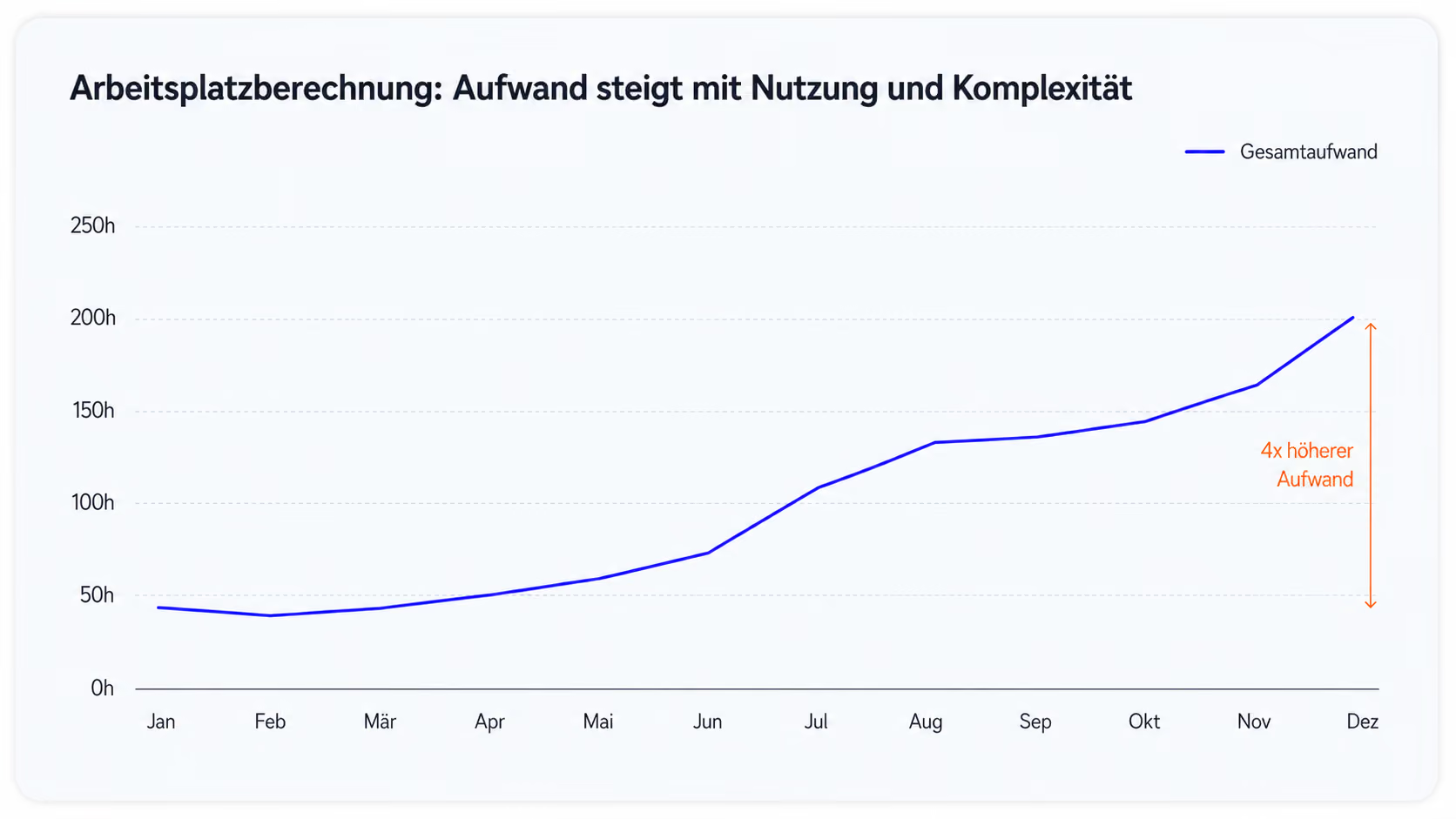
For example, a municipality operates a school, a gymnasium, and an administrative building.
The areas, uses, and activities for each building are recorded. These include cleaning, maintenance, inspections, and exterior work.
The calculation results in, for instance, an annual workload of 2,400 hours. This workload can be converted into a corresponding workload or percentage of a full-time equivalent based on the available annual working hours.
This ensures that personnel planning is based not just on an estimate, but on a verifiable calculation.
For whom is a workplace calculation useful?
A workplace calculation can be particularly useful for municipalities, schools, administrations, and companies with multiple properties.
It helps, for example, to:
• review existing staffing levels
• reassess staffing needs
• better plan personnel costs
• compare different properties
• map changes in buildings and their uses
Workplace calculation with Klarum
Klarum enables municipalities, administrations, and companies to systematically record the workload associated with their properties and calculate the resulting staffing needs.
This creates a transparent basis for planning working hours, workloads, and staffing levels – without the need to manually maintain all calculations in various spreadsheets.
Conclusion
A workplace calculation reveals how much working time is actually required for a property.
This takes into account not only the available space, but also its use, the activities performed, and their frequency. The results help municipalities, schools, and businesses to plan their staffing needs transparently and to determine appropriate staffing levels.